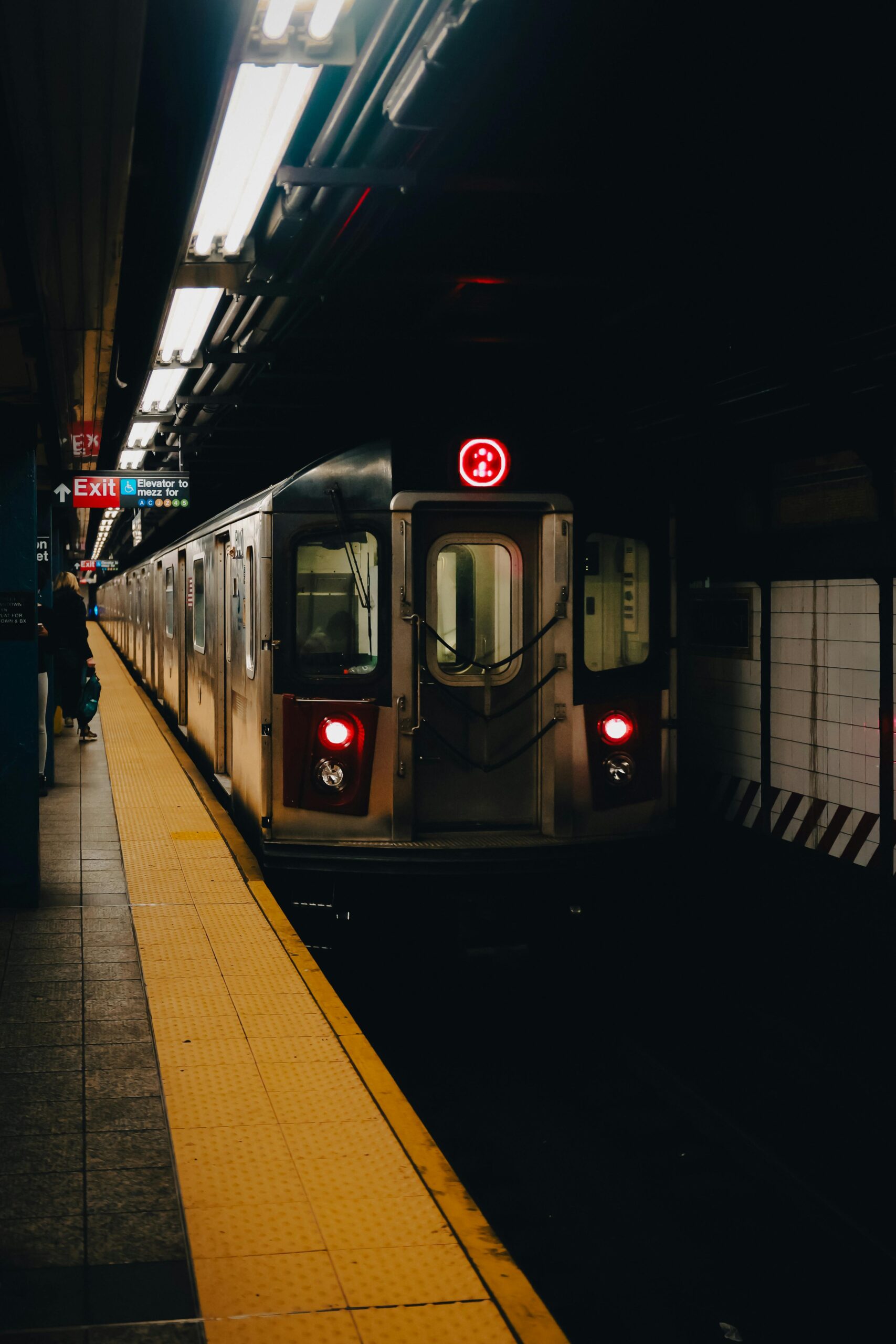
Can you sue the MTA after a Brooklyn subway injury?
Yes. If you were injured on the subway or at a station in Brooklyn due to MTA negligence — a wet platform, broken escalator, malfunctioning door, or poor maintenance — you have the right to file a personal injury claim. You do not need money upfront, and immigration status does not affect your right to sue.
- ✓ Slip and fall on wet or broken platform
- ✓ Struck by a closing subway door
- ✓ Escalator or elevator accident
- ✓ Injuries from sudden train jerks or stops
- ✓ Assault due to inadequate MTA security
- ✓ Falling debris from deteriorating stations
From East New York to Flatbush, Black and Caribbean communities have built Brooklyn and depended on its subway — while the MTA collected fares and ignored crumbling stations. If you were injured on the subway in Brooklyn, you may be able to sue the MTA and recover serious compensation for your injuries. You shouldn’t have to pay the price for their neglect.
Whether you slipped on a wet platform, got struck by a closing door, or fell on a broken escalator, you could be owed major compensation. However, the MTA is already building its defense, and strict legal deadlines mean your time to act is running out.
This post is for you.
Why Brooklyn’s Black and Caribbean Riders Face Higher Subway Risks
Decades of data prove that infrastructure neglect in Brooklyn is tied directly to race and neighborhood wealth. Stations serving Black, Caribbean, and working-class communities systematically receive fewer resources.
To advocate for equity, we must target these five specific disparities:
- Funding Deficits: Secure equal capital improvement dollars per rider.
- Extended Outages: Accelerate elevator and escalator repair times.
- Staff Shortages: Restore immediate assistance by increasing station agents.
- Delayed Repairs: Fix hazardous platforms, cracked tiles, and poor drainage.
- Outdated Fleets: Replace aging subway cars to reduce mechanical failures.
The neglect runs deep. From Robert Moses-era redlining to decades of deliberate disinvestment in Black and immigrant communities, these neighborhoods have been systematically underfunded. The subway didn’t break this pattern — it became part of it. Victims of MTA negligence in Brooklyn may have grounds for a personal injury claim and deserve an experienced subway accident attorney in their corner.
Brooklyn Neighborhoods & Subway Lines Served
As an MTA Subway accident lawyer, I represent injured riders throughout Black and Caribbean Brooklyn, including:
Flatbush & Flatbush Avenue
The heart of Caribbean Brooklyn. Home to Jamaican, Trinidadian, Haitian, and Barbadian communities. Served by the B, Q, 2, and 5 lines — with stations like Church Ave, Beverly Rd, Cortelyou Rd, and Flatbush Ave-Brooklyn College seeing heavy daily traffic and deferred maintenance.
Crown Heights & Prospect Lefferts Gardens
A deeply Caribbean neighborhood — Trinidadian, Barbadian, Guyanese, and Vincentian communities have called Crown Heights home for decades. Served by the 2, 3, 4, and 5 lines at Franklin Ave, Nostrand Ave, and Utica Ave.
East Flatbush and Canarsie
Heavily Jamaican, Haitian, and Trinidadian. Served by the L train at Canarsie-Rockaway Pkwy, New Lots Ave, and Livonia Ave — some of the most underserved stations in the system.
East New York and Brownsville
Predominantly Black communities served by the A, C, J, Z, and L lines — including Broadway Junction, one of the most complex and hazardous transfer stations in Brooklyn.
Bed-Stuy & Bushwick
Served by the A, C, J, M, and Z lines. Rapidly gentrifying, but Black residents and long-term Caribbean families remain — and remain at risk on poorly maintained. platforms.
Borough Park & Flatlands
Caribbean and Black communities served by the B and Q lines with documented histories of platform and stairwell hazards.
8 Most Common MTA Subway Injuries in Brooklyn
1. Slip and fall on wet, unlit, or debris-covered platforms
2. Injuries from sudden train stops or jerking
3. Train door closings on passengers
4. Falls due to broken or missing platform edge warnings
5. MTA Elevator and escalator accidents
6. Falling debris from deteriorating station structures.
7. Assault due to inadequate MTA security.
8. Smoke inhalation from track fires
The MTA’s Playbook — And How It Targets Vulnerable Riders
The MTA has a team of powerful attorneys whose sole job is to pay subway accident victims as little as possible. They know how to exploit fear — fear of the legal system, fear of immigration consequences, fear of authority. But here’s what they don’t want you to know: undocumented immigrants have the right to sue the MTA. Cash workers can still file a personal injury claim in Brooklyn. You don’t have to face them alone.
Here’s what they do:
1. They control the narrative: writing official reports before you can explain what happened.
2. Blame the victims: They claim you were rushing, distracted, or wearing the wrong shoes.
3. Offer fast, lowball settlements: to riders who don’t know their case’s full value
4. Delay and Exhaust: knowing that working-class families without financial cushion may eventually take whatever is offered.
5. Use your immigration status as intimidation: either directly or through implication.
Immigration status does not disqualify you from filing a personal injury claim in New York. You have legal rights in New York’s courts regardless of your documentation status. A trustworthy attorney will never weaponize this against you — and will keep your information confidential.
The 90-Day Notice of Claim: The Deadline Caribbean and Black Brooklyn Riders Often Miss
This is the rule the MTA counts on you missing. New York’s standard personal injury deadline is three years — but the MTA is a government agency, and different rules apply. 90 days. That’s it.
The 50-h Hearing: In addition to the 90-day Notice of Claim requirement, injured claimants must attend a 50-h hearing before a lawsuit against the city can proceed forward. This mandatory requirement comes from the principal of sovereign immunity, which once completely barred lawsuits against government entities.
Many members of our community miss this deadline for understandable reasons:
• They’re focused on healing, not paperwork
• They don’t know the rule exists
• They believe the MTA will “do the right thing”
• They’re working multiple jobs and can’t stop
• They distrust lawyers or the legal systems
• They’re focused on healing, not paperwork
All of these are human responses. None of them change the clock. Call a Flatbush Avenue subway accident attorney. Schedule a free consultation with me handle the deadline while you focus on recovering.
To The West Indian Community in Brooklyn
We want to say something plainly, because this community deserves plain speech:
The legal system was not built with you in mind.
Countless Caribbean immigrants miss out on rightful compensation simply because of language barriers, fear, or a lack of awareness about their rights. The MTA is fully aware of this vulnerability and relies on it to avoid accountability.
New York personal injury law protects every accident victim, regardless of immigration status, country of origin, or neighborhood. Under NY law, the MTA must maintain a safe transit system. If MTA negligence causes you harm, you have a legal right to seek full financial compensation.
New York’s personal injury law doesn’t care about your immigration status, your paperwork, or your zip code. It cares about what happened to you. The MTA is legally obligated to maintain a safe system — and when MTA negligence leads to a subway injury in Brooklyn, the law entitles you to full financial compensation. Period.
- You do not need money upfront. Contingency fees mean we only get paid when you do.
- You can have a case whether you work on the books or off the books
- Lost wages — including cash income — can be documented and compensated.
- You have the right to an attorney and legal proceedings conducted in your language.
- A prior injury does not eliminate your claim if this accident made it worse.
Your pain is real. Your case has value. And you deserve a lawyer who will fight for every dollar of it.
What Can Make Or Break Your Case
Pre-existing conditions don’t hurt your claim.
A pre-existing condition doesn’t disqualify you from compensation. If the MTA aggravated your bad back, your chronic knee pain, or a prior traumatic brain injury — or if a subway accident in Brooklyn caused a new TBI or concussion on top of existing conditions — New York’s “eggshell plaintiff” doctrine still protects you. The law is clear: the MTA is liable for every injury they worsen, not just the ones they cause from scratch.
Surveillance footage is perishable
MTA cameras record constantly, but footage is overwritten quickly — sometimes within 30 to 72 hours. Your attorney must send a legal preservation demand immediately. This is one of the most time-sensitive steps in any MTA case.
The MTA’s own maintenance logs can be used against them.
If the broken tile, malfunctioning door, or wet floor that caused your injury had been reported previously, that creates a paper trail of deliberate negligence. Experienced MTA attorneys know how to subpoena these records.
Emotional trauma is a compensable injury
Post-traumatic stress, fear of riding the subway, depression, anxiety, sleep disruption — these are real, documented, and legally recoverable damages. Speak honestly to your doctor about all of your symptoms, not just the physical ones.
In a Brooklyn subway injury claim, witnesses matter enormously
The MTA’s employees will file reports that protect the MTA. Fellow riders who saw what happened can be decisive. Get names and numbers at the scene if at all possible — even a neighbor who helped you afterward can be relevant.
Cash workers and gig workers can still claim lost wages
You don’t need a W-2. Bank records, client communications, payment app histories (Zelle, CashApp), and sworn testimony can establish income loss. Don’t assume your work situation disqualifies you.
Language access is your legal right
New York law and federal law protect your right to legal proceedings in a language you understand. Never sign a document — especially a settlement — that hasn’t been fully explained to you in your primary language.
What compensation can you recover?
Depending on the nature and severity of your injuries, you may be entitled to:
- Lost wages — whether salaried, hourly, gig, or cash income
- Reduced future earning capacity
- Loss of enjoyment of life
- Transportation costs related to medical treatment
7 Steps to Take Immediately After a Subway Injury
1st. Seek medical attention immediately
2nd. Report the incident to a station agent and request a copy of any report filed.
3rd. Photograph everything — the hazard, the scene, your injuries, the signage (or lack thereof).
4th. Collect witness information — names, phone numbers, anything.
5th. Do not give a recorded statement to MTA representatives or their insurers without an attorney.
6th. Write down your account of exactly what happened while it’s fresh — date, time, location, what you were doing, what failed.
7th. Call an attorney immediately. The 90-day clock starts the day you are injured.
We Know Brooklyn. We Fight for Brooklyn.
Koenig Pierre, Esq. represents injured riders from Flatbush to East New York, from Crown Heights to Canarsie, from Brownsville to Bay Ridge. We know these stations. We know these lines. And we know the MTA’s legal tactics — because we’ve been fighting them for years.
We work exclusively on a contingency fee basis. You pay nothing unless we win.
Call 1-800-946-4616 to Schedule A Free Consultation with an experienced MTA subway accident lawyer Brooklyn.
Blog

What Happens If an Undocumented Worker Gets Hurt on a Construction Site in NY?
Hurt on a New York construction site without papers? Your immigration status doesn’t take away your rights. Learn how workers’ comp pays your medical bills, when you can sue the property owner and contractor, whether you can recover lost wages, and why it’s illegal for your boss to threaten you with immigration. Free consultation. Nou pale Kreyòl. Se habla español.

Can I Sue for a Concussion After a Rear-End Collision in NY?
Rear-ended and now dealing with headaches, dizziness or memory problems? In New York, you can often sue for a concussion. Learn why the driver behind you is usually at fault, why a normal CT scan doesn’t end your case, what concussion cases are worth, and the deadlines you can’t miss. Free consultation. Nou pale Kreyòl.

Hit by an Uninsured Driver in NYC? What to Do Next
Hit by a driver with no insurance in New York City? You’re probably still covered. Learn who pays your medical bills, how uninsured motorist, SUM and MVAIC coverage work, what to do after a hit-and-run, and the 24-hour and 30-day deadlines you can’t miss. Free consultation. Nou pale Kreyòl.