- Nassau County Police Officer Patricia Espinosa, 42 — a wife and mother — was killed January 31, 2026 while driving to work in St. James, Long Island.
- Matthew Smith, 21, of Hauppauge, ran a red light at 70 mph in a 30 mph zone and slammed into her vehicle. His BAC was .20 — more than double the legal limit.
- Smith just pleaded guilty to aggravated vehicular homicide and related charges. He faces 7⅓ to 22 years in prison.
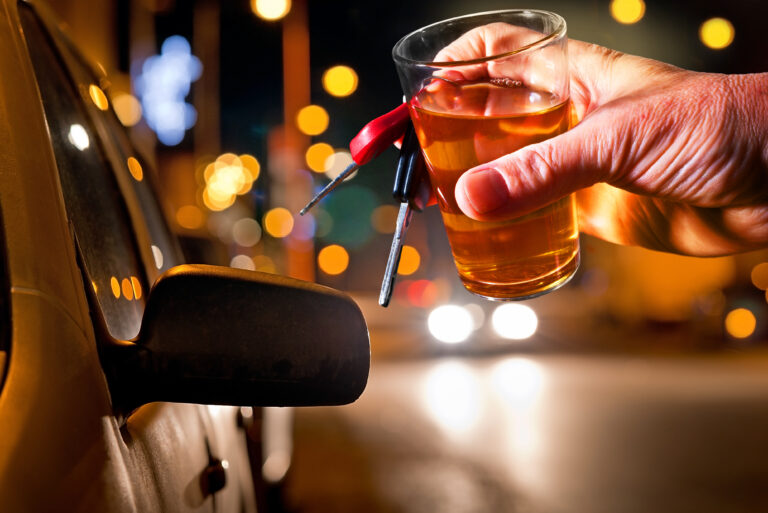
- Prosecutors say Smith was drinking in Patchogue before heading to Jake’s 58 Casino Hotel — and then allegedly dangled his keys at a bar while patrons warned him not to drive.
- Under New York’s Dram Shop Act (ABC Law § 65), any bar that served Smith while he was visibly intoxicated — or served him at all as an underage patron — may face civil liability.
- If you or someone you love was hit by a drunk driver, your rights and your clock are running simultaneously. Here’s what you need to know.
On January 31, 2026, Nassau County Police Officer Patricia Espinosa — a 10-year veteran, wife, and mother of a young daughter — was driving to work in St. James when Matthew Smith, 20, of Hauppauge, blew through a red light at 70 mph and slammed into her car. It flipped upside down. She was pronounced dead at Stony Brook University Hospital. Smith’s BAC tested at .20 — more than twice the legal limit. A bottle of Bacardi rum and a shot glass were found in his truck. Prosecutors say bar patrons warned him not to drive; he dangled his keys at them anyway.
On June 11, 2026, Smith pleaded guilty to aggravated vehicular homicide and related charges. He faces 7⅓ to 22 years in prison. The criminal case is closing — but the civil questions are just getting started, including who else may bear responsibility for putting him behind the wheel.
What Is New York’s Dram Shop Law — and Why Does It Matter Here?
Most people don’t realize that in New York, a drunk driver isn’t necessarily the only party you can hold responsible for the damage they cause. New York has what’s called a “dram shop law,” and it puts real teeth on alcohol sellers who keep pouring when they shouldn’t.
No person shall sell, deliver or give away any alcoholic beverages to: (1) Any person, actually or apparently, under the age of 21 years; (2) Any visibly intoxicated person; (3) Any habitual drunkard known to be such to the person authorized to dispense any alcoholic beverages.
That’s the statute. Simple, direct, no wiggle room. If you run a bar, a restaurant, a casino lounge, or any establishment with a liquor license in New York, you are legally prohibited from serving someone who is visibly drunk — or who is under 21. When you do it anyway and that person gets in a car and hurts someone, New York law holds you responsible right alongside the driver. The civil cause of action flows through General Obligations Law § 11-101, which gives injured victims the right to sue for damages caused by an unlawful sale.
This matters enormously in the Espinosa case. Smith was 20 years old at the time of the crash — below the legal drinking age. According to prosecutors, he had been drinking at a location in Patchogue and then at or near Jake’s 58 Casino Hotel before getting back in his truck. The alcohol had to come from somewhere. If any establishment served him — as a patron who was visibly intoxicated, underage, or both — that establishment may carry civil liability for what happened next on Route 347.
“Serving a drunk person one more drink isn’t just bad form. Under New York law, it can make you legally responsible for everything they do after they walk out the door.”
— Koenig Pierre, Esq.You can read more about how New York treats drunk driving accidents and third-party liability on my drunk driving page, where I go deep on how these cases work from a civil standpoint.
The Case for Bar Liability in This Situation
Let’s put it plainly — why might an establishment be on the hook here?
First, Smith was 20 years old. Under ABC Law § 65, serving alcohol to anyone under 21 is a violation, period. No further showing of visible intoxication is required. If any licensed establishment poured drinks for Smith that morning knowing his age — or being reckless about verifying it — that alone could ground a civil claim.
Second, Smith’s BAC of .20 at the time of the crash tells a story. A BAC that high doesn’t happen quietly. By the time someone reaches that level, they are not functioning normally — they are noticeably impaired. Slurred words. Unsteady on their feet. Possibly loud, possibly aggressive, possibly just obviously sloppy. Any experienced bartender or server should have picked up on the signs. The law doesn’t require them to test the person’s blood — it requires them to look.
Third, and most strikingly, prosecutors say Smith was warned by other bar patrons not to drive. He reportedly dangled his keys at them in response. That’s not a subtle moment — that’s a scene. If staff were present and serving in that environment and still allowed him to leave with keys in hand, that is the kind of fact pattern a civil plaintiff’s attorney builds a dram shop case around.
Combined, these facts create a compelling argument that one or more establishments may have violated ABC Law § 65 and may bear civil responsibility for the crash that killed Officer Espinosa and injured Smith’s passenger, John Andali, who suffered pelvic and spinal fractures and a severe head laceration.
Where the Bar Might Push Back — and Why That Matters
Fair is fair, so let’s also talk about why a bar’s lawyers would fight back — because they would.
New York’s dram shop liability requires proving the establishment sold alcohol to someone who was visibly intoxicated. That word “visibly” is doing a lot of work. A bar will argue that their staff observed nothing out of the ordinary — that Smith was functioning, coherent, and showed no obvious signs of impairment at the time he was served. Without a server who admits otherwise, or surveillance footage showing him stumbling at the bar, that can be a hard thing to prove. In Carver v. PJ Carney’s, 103 AD3d 447 (1st Dept 2013), the Appellate Division found that witness testimony about a patron being unsteady, aggressive, and boisterous was enough to survive dismissal and go to a jury — but that took multiple witnesses saying what they saw.
Courts have consistently held that high BAC alone, without evidence of visible symptoms, isn’t enough to hang a dram shop claim on. The New York Court of Appeals made this clear in Romano v. Stanley, 90 N.Y.2d 444 (1997), holding that a high blood alcohol count “generally does not establish the ‘visible’ intoxication” because the effects of alcohol “may differ greatly from person to person.” The intoxication has to have been apparent to a reasonable person in the establishment. Defense attorneys will also note that Smith apparently had alcohol in the vehicle itself — that bottle of Bacardi rum — raising the question of how much he drank at any particular establishment versus elsewhere.
There’s also the question of proximate cause. New York courts require that the unlawful sale actually be a contributing cause of the crash. A defendant establishment could argue that Smith’s reckless driving — 70 mph through a 30 mph zone, blowing a red light — was so far outside the range of foreseeable outcomes that it breaks the chain of legal causation from “we served him a drink” to “he killed someone.”
These are real defenses. They are not slam dunks, but they are the arguments that get raised. Whether they stick depends on the specific facts, the evidence, and the quality of the legal team pursuing the claim.
Frequently Asked Questions: Drunk Driving Accidents & Bar Liability in New York
Can a bar be sued if a drunk driver they served injures someone in New York?
What does “visibly intoxicated” mean under New York law?
How long do I have to file a lawsuit after being hit by a drunk driver in New York?
What if the drunk driver was also underage when the bar served them?
Can I sue both the drunk driver and the bar in the same lawsuit?
What types of compensation can a drunk driving accident victim recover in New York?
If You Were Hit by a Drunk Driver — Here’s What to Do Right Now
This case is a tragedy that played out on Long Island, but drunk driving wrecks happen all over New York every single day. According to the statistics I track on my New York drunk driving page, roughly 100 alcohol-related crashes happen in New York City alone every month. If you or someone you love was hurt by an intoxicated driver, here’s what matters most in the days immediately after a crash.
Call 911 — Every Time
A police report documenting the crash, the driver’s condition, and any DWI arrest is foundational evidence. Without it, the other side can dispute everything. Make sure your version of events is in that report.
See a Doctor — Even If You Feel Fine
Adrenaline masks pain. Spinal, brain, and internal injuries can take hours or days to become apparent. A same-day medical visit also closes the door on the insurance company’s favorite argument: that you weren’t really hurt.
Gather Every Detail You Can
Photos of the scene, the vehicles, road conditions, and your injuries. Names and numbers of witnesses. Screenshot everything. Evidence disappears fast — surveillance footage gets overwritten, witnesses forget. Move quickly.
Don’t Talk to the Other Driver’s Insurance
Their adjusters work for the other side. Anything you say can and will be used to reduce your settlement. Redirect every call to your attorney. Let them handle it — that’s exactly what they’re for.
Find Out Where the Driver Was Drinking
This is especially important if the at-fault driver was very drunk or underage. A bar or establishment may be liable under ABC Law § 65. Your attorney needs to investigate this early — before evidence disappears and before the other side lawyers up.
Know Your Deadlines
New York’s statute of limitations for personal injury is three years. Wrongful death: three years from the date of death. If a government entity is involved, you may have only 90 days to file a Notice of Claim. Missing these windows means losing your right to compensation entirely.
For a full breakdown of the steps to take after any car accident in New York — not just drunk driving crashes — check out my New York car accident page, where I walk through all seven steps from the scene to the settlement. If the crash involved a commercial vehicle or truck, those cases work differently — take a look at what I cover on New York truck accident claims.
The Bigger Picture: Long Island Has a Drunk Driving Problem
The Espinosa tragedy is not an outlier. Long Island routinely tops the state’s drunk driving death statistics. Babylon and Islip — both Suffolk County towns — appear in the top five most dangerous areas in New York for DUI fatalities per capita, according to data I’ve compiled on my drunk driving page. Brookhaven, also on Long Island, rounds out that list at number five.
Suffolk County District Attorney Raymond Tierney called the crash what it was: a preventable death. A wife and mother who had dedicated her life to protecting her community was killed by someone who made a choice — repeatedly, from the first drink to the last red light he ran. Patricia Espinosa’s daughter, Mia, is growing up without her mother because of that chain of decisions. Her husband, Officer Francisco Malaga, goes to work every day without her.
More than $314,000 has been raised for the Espinosa family through GoFundMe. The Nassau County Police Hispanic Society, which launched that campaign, has been a visible presence throughout this case — a reminder that behind every crash statistic is a family, a community, and a life that can never be fully restored.
Smith’s guilty plea brings a measure of criminal accountability. But the civil side of this story — who else bore responsibility for putting a .20 BAC driver behind the wheel of a Silverado at 6 a.m. — is a chapter that may still be written in the courts.
Hit by a Drunk Driver? You Have Rights — and a Clock Is Ticking.
I’ll personally review your case, answer your questions straight, and fight to make sure every responsible party is held accountable. No fee unless you win.
Get a Free Consultation Call 1-800-946-4616
Koenig Pierre, Esq.
I’m a Brooklyn-based personal injury attorney serving the New York metropolitan area — from the Bronx to Long Island. I represent victims of drunk driving crashes, car accidents, construction accidents, wrongful deaths, and more. My approach is direct, no-nonsense, and genuinely client-focused. My guiding principle: “All you need is wise counsel.” I speak English, Spanish, and Haitian Creole, and I offer free consultations with a guaranteed response within 24 hours. If your injuries prevent you from coming to me, I come to you.