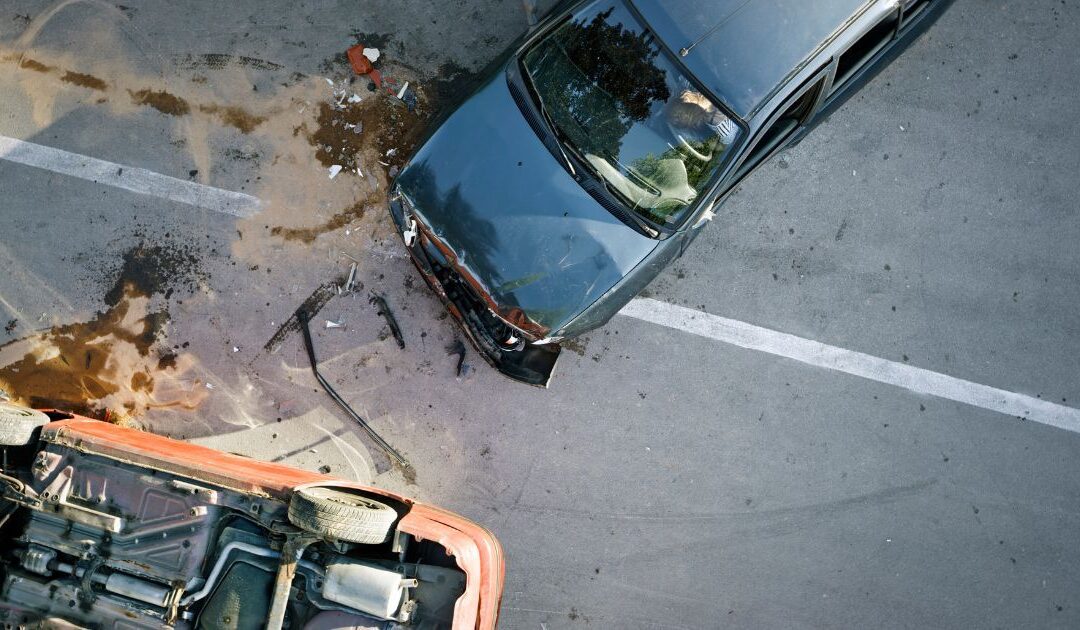
As a Black Attorney, I’ve Seen This Too Many Times — Here’s How to Protect Yourself
This article is written from the point of view of a Brooklyn personal injury attorney.
Let me be direct with you, because that’s what our community deserves.
You’ve just been in an accident — maybe a car crash on Atlantic Avenue, a slip and fall outside a Crown Heights bodega, or a collision near the Fulton Mall. You’re shaken, possibly hurt, and you do the right thing: you call the police. But when they arrive, something feels off. The officer seems dismissive. They’re not taking your statement seriously. They spend more time talking to the other party. Or worse — they barely show up at all, citing “no injuries” or “civil matter.”
I’m a Black attorney practicing in Brooklyn. I grew up here. I know this community. And I’ve had too many clients sit across from me and describe exactly that experience. It’s not in your head. It happens. And it can seriously damage your personal injury case if you don’t know what to do.
This post is for you — the Black Brooklyn resident who got hurt, called for help, and felt like the system wasn’t on their side. Here’s exactly what to do to protect yourself and your right to compensation.
Why This Happens — and Why It Matters for Your Case
Before we get into the steps, let’s name the reality: research consistently shows that Black accident victims in New York and across the country face disparities in how their cases are handled — from police response to insurance settlements. Insurance adjusters lowball Black claimants at higher rates. Emergency responders sometimes underestimate pain and injury in Black patients. And if a police report is thin, incomplete, or never filed, it can be used by the other side’s insurance company to minimize or deny your claim entirely.
A solid police report is one of the first things a personal injury attorney looks for when reviewing a case. It establishes the facts: who was involved, what happened, road conditions, witness names, and whether citations were issued. When that report is missing, incomplete, or inaccurate — your case gets harder. That’s exactly why it’s critical that you step in and build your own record from the moment the accident happens.
Step 1: Call 911 — and Follow Up If They’re Slow to Respond
Always call 911, even if the accident seems minor. Always. Request police and an
ambulance, especially if you’re feeling any pain at all. The 911 call itself creates a record with a timestamp.
If police are slow to arrive or you feel they’re not taking the situation seriously when they do, here’s what to do:
Get the officer’s name and badge number. Write it down or put it in your phone immediately. You have a right to this information.
Ask for a case or report number. Even if a full report isn’t written on the scene, there should be a case number associated with your 911 call. Get it before anyone leaves.
Ask directly: “Will you be filing a police report?” If the answer is no — or vague — you have options. In New York, if police decline to file a report, you can file a MV-104 form yourself (the New York State Report of Motor Vehicle Accident). You can submit this to the DMV directly. It’s not the same as a police report, but it creates an official record of what happened.
If you feel you’re being dismissed or treated unfairly, you can request a supervisor on the scene. You have the right to do this. Stay calm. Don’t argue. But be firm and persistent.
Step 2: Document Everything Yourself — Right Then and There
Don’t wait. Don’t assume the police or anyone else is handling it. Your phone is one of the most powerful legal tools you have. Use it.
You do not need to wait until fraud occurs. There are concrete steps you can take today.
Take photos and videos of:
- All vehicles involved, from multiple angles, including license plates.
- The exact location — street signs, landmarks, traffic signals, potholes, wet floors, broken pavement — whatever caused or contributed to the accident.
- Your injuries — bruising, cuts, swelling — even if they seem minor right now.
- The other driver’s license, registration, and insurance card.
- Any skid marks, debris, or property damage.
- Weather and road conditions.
Talk to witnesses before they leave. This is urgent. People walk away fast. Get their names, phone numbers, and if they’re willing, a quick video of them describing what they saw. Witnesses can make or break a personal injury case, especially when police documentation is thin.
Write down everything you remember — the time, the sequence of events, what the
other driver said to you, what the officer said to you — as soon as possible. Memory
fades fast after trauma. Your own written account, created right after the accident, can carry real weight.
Step 3: Seek Medical Attention Immediately — Even If You Feel “Okay”
This is not just about your health. It’s about your case.
In Brooklyn’s Black communities, there’s sometimes a reluctance to go to the hospital — whether because of distrust of the medical system, fear of bills, or not wanting to seem dramatic. I understand that. But here’s what I need you to know: if you don’t see a doctor right away, the insurance company will argue your injuries aren’t real or serious.
Injuries like whiplash, traumatic brain injuries, soft tissue damage, and internal injuries often don’t show full symptoms until hours or even days later. Going to the emergency room — Kings County, Maimonides, NYU Brooklyn, wherever is closest — creates a medical record that documents your condition right after the accident. That record is evidence.
If you’re uninsured or on Medicaid, go anyway. A personal injury attorney working on contingency (meaning you pay nothing unless you win) can often help coordinate your medical care and ensure providers are paid from your settlement.
Step 4: Get the Police Report — Then Review It Carefully
After the accident, you can obtain the police report (if one was filed) from the NYPD or through the NYS DMV. In New York City, you can request crash reports through the NYPD’s online portal or in person at the precinct.
When you get it — read every word. Mistakes in police reports are more common than people realize. Officers sometimes get facts wrong, omit witness information, or describe the scene in ways that don’t match what actually happened.
If there are errors, they can be challenged. Your attorney can send a letter to the police
department requesting corrections, or use other evidence — your photos, witness statements, surveillance footage — to contradict an inaccurate report.
And if no report was filed at all? That’s documented too. Your attorney can use that
absence to show the system failed you — and build your case through other means.
Step 5: Don’t Talk to the Other Driver’s Insurance Company
I cannot stress this enough.
After an accident, the other driver’s insurance company will likely call you — sometimes
within hours. They will sound friendly and helpful. They will ask you to give a recorded statement. They will ask how you’re feeling.
Do not give that statement. Do not say you’re “fine” or “okay.” Do not speculate about what happened. Do not accept any settlement offers before speaking with an attorney.
Insurance adjusters are trained to get you to say things that minimize your injuries and reduce what they owe you. Black claimants are already statistically more likely to receive lowball offers. Giving a recorded statement before you have legal representation can make your case significantly harder to win.
You are not legally required to speak with the other party’s insurance company. Tell them you’ll have your attorney contact them. Then get an attorney.
Step 6: Document the Police Interaction Itself
If you experienced dismissiveness, bias, or unprofessional conduct from law enforcement at the scene, document that too.
Write down exactly what was said and done — by the officer, by yourself, by others present. Note the officer’s name, badge number, precinct, and the time of the interaction.
You can file a complaint with the NYPD’s Civilian Complaint Review Board (CCRB), which is an independent agency that investigates misconduct. You can also file a complaint with the NYC Commission on Human Rights if you believe you were treated differently because of your race.
This won’t directly win your personal injury case, but it creates an official record — and it matters for accountability in our community.
Step 7: Call a Brooklyn Personal Injury Attorney Who Gets It
Here’s the truth: navigating a personal injury claim in New York is complicated under the best circumstances. When you add in a weak or missing police report, a dismissive system, and an insurance company looking for reasons to deny your claim — you need someone in your corner who understands all of it.
As a Black attorney practicing in Brooklyn, I take these cases personally. I know what it means to fight for a community that has historically been underserved by the legal system. I know what it’s like to have a client tell me, “I didn’t think I could sue — I thought it was my fault,” or “The insurance company offered me $2,000 and I almost took it” — when their case was worth ten times that.
You deserve full and fair compensation for your medical bills, lost wages, pain and suffering, and more. You deserve an attorney who will fight for that — and who won’t let a thin police report or a lowball offer be the end of your story.
Personal injury cases in New York are taken on contingency — meaning you pay nothing unless we win. There’s no risk to picking up the phone and having a conversation.
Common Brooklyn Accident Scenarios We Handle
- Car and truck accidents on the BQE, Atlantic Avenue, Flatbush Avenue, and across Brooklyn.
- Pedestrian accidents — particularly in high-traffic areas like Downtown Brooklyn, Bed-Stuy, and Canarsie.
- MTA bus and subway injuries on Brooklyn routes.
- Construction accidents in gentrifying neighborhoods across the borough.
- Bicycle accidents on Brooklyn streets
You Have Rights. Use Them.
Brooklyn is our borough. We’ve built it, sustained it, and we deserve to be protected in it — by the law, by the courts, and by attorneys who fight for us.
If you or someone you love was injured in an accident in Brooklyn and felt dismissed,
ignored, or underserved — please reach out. Your story matters. Your injuries matter. And your case matters. Koenig will help you get the settlement you deserve.
Call our Brooklyn office today for a free consultation. We speak your language, we
know your community, and we are ready to fight for you.
If you were injured at a store or bodega in Flatbush, read my full guide: Slip and Fall at Flatbush Bodega? Here’s Why You Probably Have a Case – covering premises liability law, what evidence to preserve, and how New York’s comparative negligence rules protect you even if you were partly at fault. Hurt at a Flatbush store on Utica, Nostrand, or Church Ave Learn how New York premises liability law protects you – and how to build a winning slip and fall case.
About the author
Koenig Pierre, Esq.
Brooklyn Personal Injury Attorney · Black-Owned Law Practice · Brooklyn, NY
Koenig Pierre is a Brooklyn-based personal injury attorney and lifelong New Yorker who represents accident victims across Crown Heights, Flatbush, Bed-Stuy, Canarsie, East Flatbush, and Downtown Brooklyn. As a Black attorney, he has seen firsthand how Brooklyn residents — particularly Black and Caribbean communities — face dismissive police responses, thin or missing accident reports, and lowball insurance offers after crashes on Atlantic Avenue, the BQE, and Flatbush Avenue. He fights back using photos, witness statements, MV-104 filings, and surveillance footage when the system falls short. All cases are handled on contingency — no fee unless you win. J.D., Hofstra University School of Law. NY Bar No. 4972402.
Blog

What Happens If an Undocumented Worker Gets Hurt on a Construction Site in NY?
Hurt on a New York construction site without papers? Your immigration status doesn’t take away your rights. Learn how workers’ comp pays your medical bills, when you can sue the property owner and contractor, whether you can recover lost wages, and why it’s illegal for your boss to threaten you with immigration. Free consultation. Nou pale Kreyòl. Se habla español.

Can I Sue for a Concussion After a Rear-End Collision in NY?
Rear-ended and now dealing with headaches, dizziness or memory problems? In New York, you can often sue for a concussion. Learn why the driver behind you is usually at fault, why a normal CT scan doesn’t end your case, what concussion cases are worth, and the deadlines you can’t miss. Free consultation. Nou pale Kreyòl.

Hit by an Uninsured Driver in NYC? What to Do Next
Hit by a driver with no insurance in New York City? You’re probably still covered. Learn who pays your medical bills, how uninsured motorist, SUM and MVAIC coverage work, what to do after a hit-and-run, and the 24-hour and 30-day deadlines you can’t miss. Free consultation. Nou pale Kreyòl.