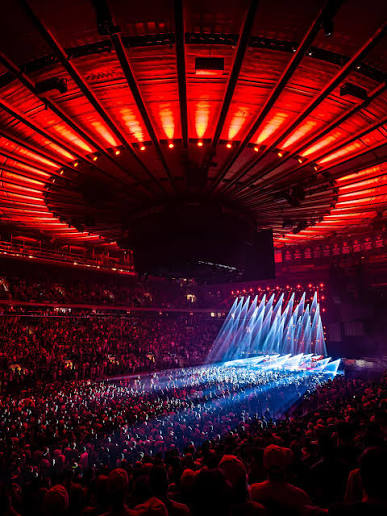
Man Falls to His Death at Madison Square Garden. Here's Who Could Be Liable.
A 51-year-old concertgoer fell from an upper level at MSG during Saturday night's Goose concert and didn't survive. Brooklyn injury lawyer Koenig Pierre breaks down the Madison Square Garden fall death investigation, who might be on the hook, and what a family in this position should do right now.
I want to talk to you straight about what happened at Madison Square Garden Saturday night, because it's the kind of story that should stop every one of us in our tracks. A 51-year-old man suffered a fatal fall from one of the arena's upper tiers during a sold-out Goose concert. He lost consciousness at the scene and was rushed to Bellevue Hospital, where doctors couldn't save him. The NYPD says his wife was right there with him when it happened, and that officers got the call just before 10 p.m.
This Madison Square Garden fall death is still fresh, and the investigation is still in progress. Police haven't released the man's name. They haven't confirmed exactly how far he fell or what led up to it, though multiple outlets report he was seated in the arena's 300 level — the upper seating bowl, roughly ten stories above the floor. Goose, the Connecticut jam band headlining the second of two consecutive nights at the Garden, put out a statement calling themselves heartbroken over what happened and thanking the responders and staff on the scene.
I've been doing this work in Brooklyn long enough to know that "tragic accident" gets used as a period at the end of a sentence, when really it should be the start of a question: how does a man end up falling from an upper level of one of the most heavily staffed, most monitored arenas in the country? That question is exactly what a liability investigation is built to answer.
What I Know So Far
Here's what I can tell you has been publicly confirmed as of this writing:
- The man was 51 years old and attending Saturday's Goose concert with his wife.
- NYPD got the call shortly before 10 p.m. and arrived to find him gravely injured, with no pulse by the time paramedics reached him.
- He was transported to Bellevue Hospital, where he was pronounced dead.
- Reports place the fall as originating from the 300 level, the Garden's uppermost seating tier.
- Police have stated the incident is not being treated as a crime, and I can confirm the investigation into exactly how the fall happened is still ongoing.
I'll say what I always say at this stage: nobody has been officially found at fault for anything yet, and everything below is my read on how New York liability law would apply to a fall like this — not a verdict, and not a final word on what happened Saturday night.
Who Can Be Held Liable When Someone Falls at a Venue Like MSG?
People walk into my office all the time assuming a tragedy like this has one obvious villain. It almost never does. A venue fall involves layers — the property owner, the event operator, the people running security, and sometimes the design of the building itself. To be clear, I'm not saying any of these parties did anything wrong here. This is a preliminary look at the categories of parties that typically get examined in a fall case like this one, before any facts about Saturday night are confirmed:
| Party | Basis for Potential Liability |
|---|---|
| MSG / The Venue Operator | Under New York premises liability law, a venue owner owes everyone inside a duty of reasonable care to keep the property safe. That includes railings, barriers, and walkway design that meet building code for a venue with this many people moving through tight, multi-level concourses. |
| Building Code Compliance | If a guardrail, barrier, or section design didn't meet the height or strength requirements New York's building code demands for assembly venues, that's a direct piece of evidence in a negligence claim. Multi-tiered arenas built or renovated in phases — like the Garden, which underwent major upper-bowl construction in the 2010s — sometimes carry legacy design elements investigators look at closely. |
| Event Security and Staffing | Venues this size are required to have adequate crowd monitoring, especially in upper-level sections where alcohol service and standing-room behavior are common. Whether staffing and monitoring were adequate Saturday night is a fair question. |
| Third-Party Vendors | If a contracted security firm, concessions operator, or maintenance contractor played any role — for example, in barrier upkeep or crowd control in the section where the fall occurred — that company can carry its own separate liability. |
The Legal Standard I'm Working With
In New York, property owners and venue operators owe lawful visitors what's called a duty of reasonable care. That means identifying foreseeable hazards — including fall risks in elevated, crowded seating areas — and taking reasonable steps to prevent them. When a venue fails that duty and someone is seriously hurt or killed as a foreseeable result, that's the foundation of a premises liability claim. If the fall results in death, New York law also allows the family to pursue a wrongful death claim separately from any claim the estate itself may have.
New York follows a rule called pure comparative negligence. In plain terms, that means more than one party — sometimes including the person who was hurt — can share a percentage of fault, and compensation gets calculated accordingly. That determination depends entirely on facts that haven't been made public yet. Until the investigation produces those facts, any conclusion about percentages of fault would be getting ahead of the evidence, and I'm not going to do that here.
If this happened to your family, you don't have to figure out the liability questions alone.
Get a Free Case ReviewThis Isn't the First Time I've Had to Write About Fall Liability at a Major Venue
I've watched this pattern before, and I'll tell you why it matters: falls at large public venues aren't as rare as people assume, and that history speaks directly to whether a hazard was foreseeable. A man died after a similar fall from an upper deck at Allegiant Stadium during a Raiders game in 2024, and a fan died after falling from the upper deck at State Farm Stadium during a Cardinals game in 2023. Both cases drew scrutiny of guardrail height and crowd-monitoring practices in the sections involved. When I see a pattern like this across the live-events industry, it tells me it becomes harder for any single venue to argue a fall risk wasn't foreseeable.
What I Tell Families in This Position
If you lost someone, or you or a loved one were injured in a fall at a concert, sporting event, or any large public venue, here's what I tell every client about protecting their rights while an investigation is still open:
- Don't wait on the police investigation to conclude. A criminal or department investigation answers different questions than a civil claim does, and evidence at venues like MSG — ticket scans, security footage, staffing logs — can be retained for a limited window.
- Preserve everything you have. Ticket stubs, photos, texts sent that night, and the names of anyone you spoke with at the venue are all relevant.
- Get medical documentation if you were injured, even if it didn't seem serious that night.
- Talk to a lawyer before you talk to an insurance adjuster. Venues and their insurers move fast after an incident like this, and early statements can be used against a claim later.
If You Lost a Family Member, Here's What I Want You to Know
I've sat across the table from too many families in the days after a sudden death, and I know that legal advice is probably the last thing on your mind right now. But a few things matter early, and I'd rather you hear them from me now than learn them the hard way later.
- Know who can bring the claim. In New York, a wrongful death claim isn't filed by the family directly — it's filed by the personal representative of the deceased's estate, on behalf of the surviving spouse, children, or other distributees who depended on them. If there's no will and no executor named yet, the court can appoint an administrator, and that step needs to happen before a claim can move forward.
- Understand what damages actually cover. New York wrongful death law is built around financial loss — lost income and support the family would have received, lost services, funeral and burial costs, and medical expenses tied to the final injury. It does not, on its own, compensate for grief. A separate claim, on behalf of the deceased's estate, can seek compensation for the conscious pain and suffering he experienced between the injury and his death, if any.
- The clock is already running. Wrongful death claims in New York generally must be filed within two years of the date of death. That sounds like a long time until you're in the middle of it. If a government entity could be involved — for instance, if city-owned property or city employees played any role — that window can shrink dramatically, sometimes to a matter of months for an initial notice. Don't assume you have two years if you're not certain who all the potential defendants are.
- Don't sign anything from the venue or its insurer without a lawyer reading it first. An early settlement offer, a liability waiver buried in event terms, or a request for a recorded statement can all affect a family's rights permanently. None of that should be handled alone.
- You're allowed to grieve before you decide anything. There's no requirement that a family make decisions about a lawsuit in the first days or weeks. Evidence preservation matters early, but the decision of whether and how to pursue a claim can wait until you're ready to have that conversation.
Common Questions I Get About Cases Like This
Can I sue Madison Square Garden if a family member died there?
It's possible, and here's how I'd look at it. If the venue failed to maintain safe guardrails, barriers, or adequate security in the area where the fall happened, that opens the door to a claim under New York premises liability and wrongful death law. I can't tell you whether you have a case just from a headline — it comes down to the specific facts, including what actually caused the fall and whether the hazard was something the venue should have seen coming. That's exactly what I'd dig into in a free consultation.
Who is liable if someone dies from a fall at a concert or sporting event in NYC?
I never assume it's just the venue. Depending on what caused the fall, liability can land on the venue operator, the building owner, the security contractor working the event, or whoever was responsible for maintaining the railings and barriers in that section. New York law holds venues to a duty of reasonable care for everyone inside. When I take on a case like this, I pull the police reports, the security footage, and the maintenance records to figure out who actually dropped the ball.
How much does it cost to hire a wrongful death lawyer in New York?
Nothing upfront, and that's true for my office and most wrongful death lawyers in New York. I work on contingency, which means I only get paid if your case results in a settlement or a verdict. The first conversation, where I review what happened and tell you straight where you stand, costs you nothing.
How long do I have to file a wrongful death claim in New York?
Generally, you have two years from the date of death to bring a wrongful death claim in New York. But I'll warn you, that clock can move a lot faster than people expect. If a city-owned venue or a government employee may have played any role, the window for an initial notice can shrink to a matter of months. Don't sit on this assuming you have the full two years until you know exactly who might be responsible.
Do I need a lawyer if my family member died at a concert venue?
You're not legally required to have one, but I'll be honest with you about what you're up against: the venue and its insurance company already have lawyers working to limit what they pay out, often within days of the incident. My job is to preserve the evidence, deal with the insurers, and protect your family's right to compensation, so you can put your energy into grieving instead of fighting an insurance company on your own.
What happened at the Garden Saturday night is still unfolding, and I'll be honest with you — pieces of this story are going to change as more facts come out. But the legal questions don't wait for a press conference. If you've lost someone in a fall at a concert, stadium, or any public venue in New York, you don't have to sort out who's responsible on your own.
Lost Someone in a Fall at a NYC Venue?
Call my office. I'll sit down with you, listen to what happened, and tell you straight what your options are. The consultation costs you nothing.
Schedule a Free ConsultationOr call now: 1-800-946-4616

Koenig Pierre, Esq.
Brooklyn Personal Injury & Wrongful Death Lawyer
Koenig Pierre is a New York personal injury lawyer based in Brooklyn, representing victims and families across all five boroughs in premises liability, wrongful death, and negligence cases. "The desire to come through for my clients is the driving force behind my practice."