They Came to Catch a Train.
They Left in an Ambulance.
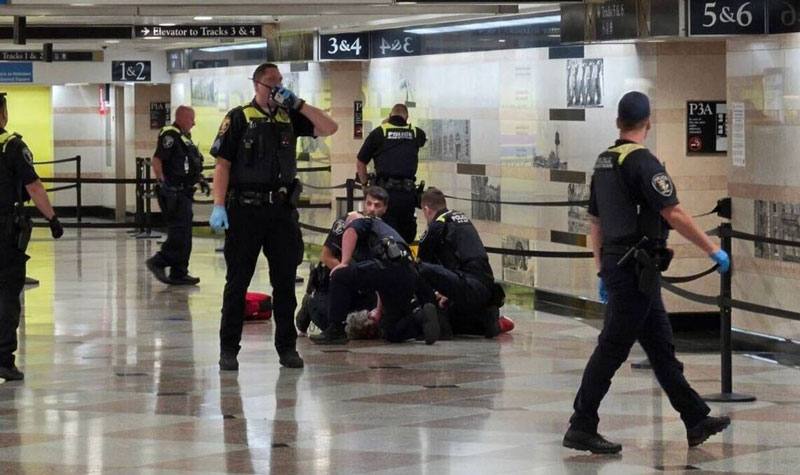
Six people stabbed at Penn Station the night before the Knicks' first home Finals game in 27 years. If you're attacked on public transit in New York City, here's what you need to know — and what you're legally entitled to do about it.
Sunday night, June 7, 2026. The whole city is running hot. The Knicks are up 2-0 over the Spurs. Game 3 is tomorrow night right here at Madison Square Garden — their first Finals game on home floor since 1999. The energy in this town is electric. People are out. Penn Station is packed.
And then a man pulls out a knife on the NJ Transit concourse and starts slashing.
Just after 7 p.m., while half the city was still buzzing about Brunson and whether Trump's security detail would shut down the watch party outside MSG — six people were rushed to hospitals. One with serious injuries. The others ranging from moderate to minor. All of them had been minding their business.
That's the thing about New York right now. It's the best of times and — sometimes, on the same concourse, at the same moment — it's also a reminder of how quickly things can go sideways in a city that never fully figured out how to take care of its most vulnerable people.
I'm Koenig Pierre, a Brooklyn personal injury attorney. I don't do politics. I do results. And right now I want to talk to you directly — the everyday New Yorker, the person catching the 7 train home, the commuter going through Penn on the way to Jersey — about what your rights are if you ever become one of those six people.
What Happened at Penn Station on June 7th
Here's the scene. It's a Sunday evening. The city is already buzzing with Knicks fever — bars near Penn Station were already packed for watch party overflow from MSG, with fans posted up at spots like Stout Penn Station on 35th Street, Goldie's Tavern, and Mustang Harry's just blocks away. The whole corridor between 31st and 35th and 7th and 8th was on a different kind of energy. Security preparations for Game 3 and Trump's expected arrival the next night had the whole neighborhood in a heightened state — and Penn Station sat right in the middle of all of it.
Into that mix walks a man who, according to senior law enforcement officials, appeared to have mental health issues. On the NJ Transit concourse at West 33rd and 7th Avenue, he started stabbing. One person suffered serious injuries; two had moderate wounds; two had minor injuries — all five went to Bellevue. A sixth victim went to Cornell Hospital. Amtrak police tackled the suspect after deploying pepper spray. A knife was recovered at the scene. A high-ranking NYPD source confirmed there was no terrorism connection.
Just a random Sunday. Just a man in crisis, in one of the most heavily trafficked transit hubs on the East Coast, the night before a historic Knicks home game — and six people left in ambulances instead of heading home.
This Isn't a Fluke — The Numbers Back It Up
Every time something like this happens, somebody says it's an isolated incident. And look — statistically speaking, the subway is safer than it used to be. Overall transit crime dropped nearly 17% compared to 2019 levels this past summer, and felony assaults were down 21% from 2024. Governor Hochul has put real money into this — 32,000 security cameras system-wide, platform barriers at over 115 stations, and ten mental health SCOUT co-response teams deployed throughout the system.
That's real progress. Nobody's pretending otherwise. But here's what the data also shows — and what the MTA knows full well:
— Vital City, Jan. 2025
— Vital City, Jan. 2025
Vital City's 18-year analysis of NYPD arrest data found that half of all violent subway crimes take place at just 30 of the city's 472 stations. These aren't random unknowable risks — they're patterns. And when a transit authority the size of the MTA knows about a pattern and doesn't act on it adequately, there's a legal term for that: negligence.
The NYC Comptroller's office has reported that approximately 2,000 individuals with serious mental illness cycle through the city's streets, subways, jails, and hospitals in a revolving-door loop that nobody has been brave enough to fully break. The system has failed these people. And sometimes, that failure bleeds out — literally — onto the rest of us.
Before We Go Further — Remember Debrina Kawam
We have to stop here. Because the Penn Station stabbing — as horrifying as it is — is not even the most disturbing subway attack this city has seen in recent memory.
On the morning of December 22, 2024, a 57-year-old woman named Debrina Kawam was sleeping on a stationary F train at the Coney Island–Stillwell Avenue station in Brooklyn. A man named Sebastian Zapeta allegedly walked up to her, used a lighter to set her clothing on fire, then fanned the flames with a shirt until she was fully engulfed. He walked out of the subway car, sat down on a bench, and watched.
Police were at the station. They used a fire extinguisher. It was too late. Debrina Kawam — a woman from Toms River, New Jersey, who appeared to have mobility issues and was sleeping on the train — was pronounced dead at the scene.
What happened next: Three high school students recognized Zapeta from surveillance images and called police. He was arrested in a subway car at Herald Square hours later, with a lighter still in his pocket. He has pleaded not guilty to first and second degree murder and first degree arson charges, and faces life without parole if convicted.
That case raises serious questions about the MTA's duty of care that a premises liability attorney should be asking. What did officers on that platform do when this man got on the train? Were any protocols followed? Those aren't rhetorical questions. In a civil lawsuit, they become the basis of discovery.
The 90-Day Clock Starts the Day You're Attacked.
In New York, you must file a Notice of Claim against the MTA within 90 days of any incident. After that window, your right to sue is almost certainly gone. If you or someone you love was hurt on public transit, don't wait.
Do You Actually Have a Legal Case? The Real Answer.
Let me give it to you straight, the way I'd explain it to someone at a kitchen table in Flatbush or Bed-Stuy: it depends on the facts, but the law is more on your side than you think.
A lot of people assume that because the attacker was some random person — or a person in mental health crisis — there's no one to hold accountable. That's not how the law works. The MTA has an independent legal duty to provide a reasonably safe environment for its passengers. That duty exists regardless of who caused the harm.
The legal theory is called negligent security. In plain English: if the MTA knew, or should have known, that a place was dangerous — and failed to take reasonable steps to protect people there — they can be held liable for what happens. Given what the data shows about where attacks happen, who commits them, and the MTA's years of documented awareness, that "knowledge" bar is lower than you might expect.
What Your Attorney Needs to Establish
- ①Duty
The MTA owed you a duty of reasonable care as a passenger using its facilities. This is established the moment you're on their property.
- ②Breach
The MTA failed to meet that duty — through inadequate security staffing, poor lighting, failure to remove known threats, or lack of mental health response resources. Prior similar incidents at the same location are among the most powerful evidence available.
- ③Causation
That breach was the proximate cause of your injuries — meaning that if the MTA had done what it was supposed to do, you likely wouldn't have been hurt.
- ④Damages
You suffered actual, documented harm — physical injuries, medical bills, lost income, emotional trauma. The more thoroughly documented, the stronger your claim.
New York follows comparative negligence principles under CPLR § 1411, which means that even if a court finds you bore some percentage of fault, you can still recover damages — reduced by that percentage. In most random transit attack cases, victims bear zero fault.
The Deadlines That Can Kill Your Case Before It Starts
This is where people lose their rights — not in a courtroom, but on a calendar. Suing the MTA is not the same as suing your neighbor. Because it's a public authority, the rules are different and strictly enforced.
90 days. That is how long you have to file a Notice of Claim against the MTA after a subway assault. After that window closes, your right to sue is almost certainly gone — permanently. The statute of limitations to file the actual lawsuit is 1 year and 90 days from the date of injury — shorter than the standard 3-year window for most personal injury claims in New York.
The MTA will also conduct a 50-H hearing — a pre-lawsuit examination where you'll be required to answer questions under oath. Your attorney needs to prepare you for this. It's not optional, and how you handle it matters enormously to the strength of your case.
The bottom line: call a lawyer the same week it happens. Not the same month. The same week.
If You're Attacked on the Subway: What to Do Right Now
The moments after an assault are chaotic, scary, and overwhelming. But the actions you take — or skip — in those first hours and days can directly determine whether you ever see any justice. Here's your playbook:
- 1Get Medical Attention. Period.
Go to the emergency room even if you think you're "okay." Adrenaline masks pain. Documented medical records are the foundation of your entire claim. Don't minimize anything to the triage nurse.
- 2Call 911 — Make Sure There's a Report.
Get a police report filed. Get the report number. Notify any MTA or transit personnel at the scene. The existence of an official report is critical and non-negotiable.
- 3Document Everything You Can.
Photograph your injuries, your clothing, the location. Write down what happened in as much detail as you can while it's fresh. Collect names and phone numbers of any witnesses.
- 4Bag Your Clothes — Don't Wash Them.
What you were wearing is physical evidence. Seal it in a plastic bag. It can corroborate the nature and severity of the attack in ways photos alone cannot.
- 5Don't Talk to the MTA's People Without a Lawyer.
MTA representatives and insurance adjusters will reach out quickly. They are not your friends. Do not give any recorded statements before speaking to an attorney. Anything you say can be used to minimize or kill your claim.
- 6Call a Personal Injury Attorney — This Week.
The 90-day clock doesn't care that you're stressed or injured or grieving. The sooner you get legal counsel, the better your attorney can preserve surveillance footage and build your case before evidence disappears. Schedule a free consultation with Koenig Pierre here.
When the MTA Has Been Held Accountable: Real Cases
This is not uncharted territory. New York courts have repeatedly found that the MTA bears civil liability when its failures contribute to a rider getting hurt.
A Brooklyn federal jury awarded nearly $82 million to Luisa Janssen Harger da Silva, a 21-year-old tourist who fainted and fell onto the tracks at Atlantic Avenue, losing her left arm and left leg. Her lawsuit argued successfully that the MTA had decades of data showing the risk of track falls without platform barriers — and ignored it. The verdict wasn't just about her. It was a message to the entire system.
After Ki-Suck Han was fatally pushed onto the tracks by Naeem Davis — a homeless man — at the 49th Street station, his family sued the MTA for negligence, alleging the authority failed to provide adequate platform security and to intervene with a visibly agitated individual. The case put the MTA's monitoring obligations front and center in public discourse.
New York courts have consistently held that prior violent incidents at a specific station are powerful evidence of the MTA's awareness of risk. If attacks have occurred at the same platform before and the MTA failed to increase staffing, lighting, or surveillance in response, that foreseeability finding can establish liability. The MTA's own Annual Safety Report and station-specific incident logs are discoverable in litigation.
What If the Attacker Was Unhoused or In Mental Health Crisis?
Let me address something I hear from clients all the time: "The guy who attacked me was homeless. There's nothing to sue for, right?"
Wrong. You're thinking about it backwards.
Yes — recovering money directly from an individual who has no resources is often not a viable path. But that's not your only target. The MTA is a $20+ billion public authority. And the statistical reality that roughly 90% of the most violent repeat subway offenders are homeless or in mental health crisis doesn't let the MTA off the hook — it puts them more on the hook. Because they know. They've commissioned the studies. They've read the data.
The question in your case is whether the MTA took reasonable steps to address a risk they were fully aware of. Was there adequate mental health co-response capacity at that station? Had this individual been reported before? Were outreach teams deployed? Was security staffing appropriate for the time, location, and known risk profile?
At Penn Station — the night before a presidential-security-level NBA Finals game, with six people getting stabbed on the NJ Transit concourse — those questions deserve a thorough examination.
What Compensation Are You Entitled To?
If you have a viable claim, the damages in a transit assault case can be substantial. Here's what a New York personal injury attorney will pursue on your behalf:
Economic damages: All past and future medical expenses — ER visits, surgeries, physical therapy, psychiatric treatment, medication. Lost wages from time missed at work. Reduced earning capacity if your injuries affect your ability to work going forward.
Non-economic damages: Pain and suffering, emotional distress, post-traumatic stress disorder, loss of enjoyment of life. The psychological impact of being a random victim of violence in a place you were entitled to feel reasonably safe is real, documented, and compensable under New York law.
Wrongful death cases: If someone was killed — as in the Kawam case — the victim's estate and family members may pursue compensation for loss of consortium, funeral and burial expenses, and the financial and emotional support the deceased would have provided over a lifetime. Our wrongful death attorneys handle these cases with the care and seriousness they deserve.
Frequently Asked Questions
Can I really sue the MTA if I was attacked on the subway?
Yes. Under New York law, the MTA has a legal duty to provide a reasonably safe environment for riders. If it knew — or should have known — about dangerous conditions and failed to act, you may have a valid negligence claim. The key is getting an attorney involved quickly so the Notice of Claim can be filed within 90 days of the attack.
What is the 90-day Notice of Claim deadline and why does it matter so much?
Because missing it almost always ends your case. New York law requires you to formally notify the MTA of your intention to seek compensation within 90 days of the incident. After that, absent very limited exceptions, you lose your right to sue. The final statute of limitations is one year and 90 days from the date of injury — shorter than standard personal injury claims.
What if the attacker was homeless or had mental health issues?
You may still have a strong case against the MTA. The MTA's documented awareness of the high rates of mental health crises and homelessness among violent offenders supports the argument that the risk was foreseeable — and that the MTA had a duty to address it more aggressively. You pursue the MTA separately from any criminal proceedings against the attacker.
I didn't go to the ER right away. Can I still file a claim?
Potentially yes, but delayed medical treatment makes your case harder. Seek medical attention as soon as possible and document your injuries thoroughly. An attorney can help you assess the strength of your claim given the specific circumstances.
How much does it cost to hire a subway injury attorney?
At Koenig Pierre's office, we work on contingency — meaning there are no upfront fees. You pay nothing unless we recover compensation for you. Your initial consultation is also completely free.
Attacked on the MTA? Let's Talk — Before That 90-Day Window Closes.
Koenig Pierre is a Brooklyn personal injury attorney who has spent his career fighting for New Yorkers — not agencies, not corporations, not insurance companies. If you or someone you love was attacked on the subway, at Penn Station, or anywhere on MTA property, we want to hear from you. The consultation is free. The evaluation is free. You pay nothing unless we win your case.
Sunday night's attack at Penn Station is a snapshot of the city we live in right now — a city where the Knicks are making history a few blocks over while someone in a mental health crisis is slashing commuters on the NJ Transit concourse. That contrast isn't New York failing. It's New York being New York, in all its impossible complexity.
But complexity is not the same as helplessness. If you get hurt on this city's public transit, you are not just a statistic. You are a person with rights. And those rights are worth fighting for.

Legal Disclaimer: This article is for general informational and educational purposes only and does not constitute legal advice. Reading it does not create an attorney-client relationship. Every legal situation is unique. If you've been injured, consult a licensed attorney regarding your specific circumstances as soon as possible — particularly given the strict filing deadlines that apply to claims against government entities in New York. Case results cited are not a guarantee of future outcomes.