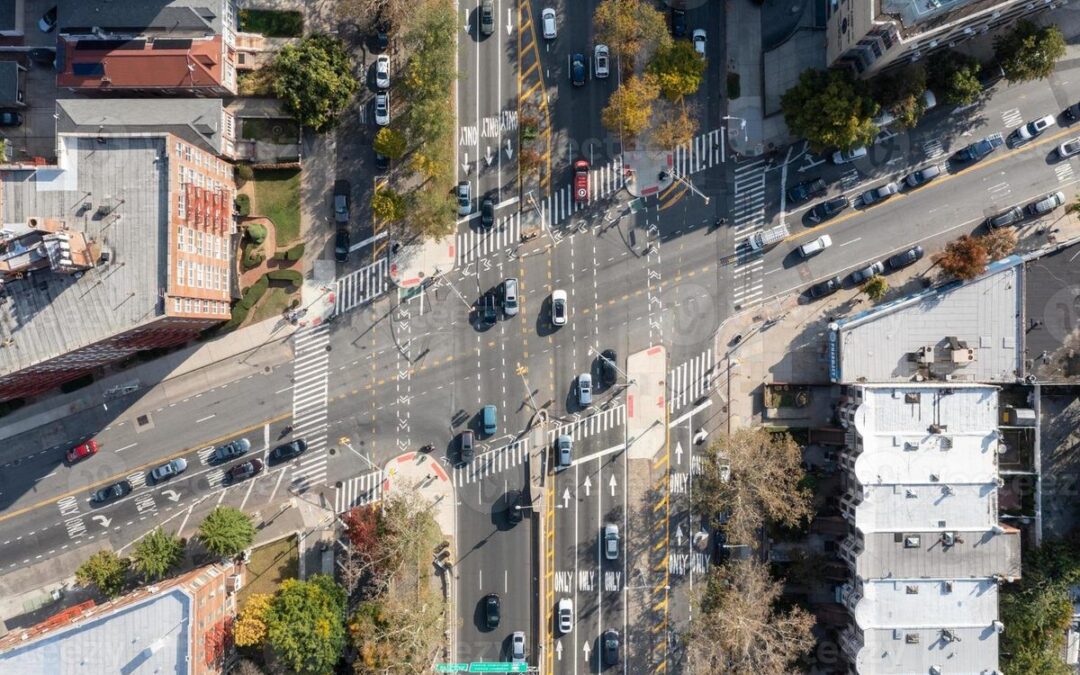
Brooklyn Car Accident Attorney · Ocean Avenue & Glenwood Road
Hit by a Car on Ocean Avenue?
A Flatbush Accident Lawyer Who Grew Up on This Block
Explains What You Need to Know.
A first-person guide for Flatbush, Ditmas Park, Little Caribbean & Little Haiti residents on their legal rights after a car accident on this corridor.
Get a Free ConsultationI am going to be straight with you.
This is not a generic blog post about car accidents in Brooklyn. This is about a specific block, a specific neighborhood, and specific dangers that people who live here know in their bones — even if they don't know the legal name for what's happening to them.
My mother lives on Ocean Avenue and Glenwood Road. She has been there for years. I grew up on these streets. I know what the B41 bus sounds like when it leans into the turn. I know the way Flatbush Avenue traffic spills onto Ocean Avenue on a Friday evening. I know the Haitian and Jamaican and Trinidadian families who fill the churches along this corridor every Sunday morning. I know the Pakistani and Bangladeshi shopkeepers who open at dawn. I know the longtime Caribbean-American homeowners who have anchored this neighborhood for three generations. I know the seniors who walk to the corner store on Glenwood Road every single morning, rain or shine.
"My mother was hit in an Uber on this block. She didn't know that Uber's $1.25 million insurance policy was active. She almost walked away from it."
When it happened, she didn't know what to do. She didn't know that Uber's insurance was active because the driver had a passenger. She didn't know that New York's no-fault rules applied differently in a rideshare crash. She didn't know that the way she described her pain to the first doctor she saw could affect her case six months later. She just knew she was hurt and she was scared.
I'm writing this for her — and for everyone on Ocean Avenue who might find themselves in the same place.
Who Lives on This Corridor — And Why That Changes Everything Legally
Ocean Avenue above Avenue H runs through one of the most genuinely diverse corridors in all of New York City. The neighborhood is home to the Haitian community anchored in Little Haiti — formally designated by New York City in 2018 along boundaries that touch Avenue H directly. Haitians make up more than 20% of Flatbush's foreign-born population, the highest concentration of Haitian-owned businesses in the five boroughs running through this corridor.
The Jamaican, Trinidadian, Barbadian, and Guyanese families who built Little Caribbean — officially recognized as stretching along Flatbush and Church Avenues — have called Prospect Lefferts Gardens and Ditmas Park home for decades. African American residents have lived here since before the demographic shifts of the 1970s. South Asian, Bangladeshi, and Pakistani communities anchor the commercial strips east and south of here. And there are the newer arrivals — teachers, nurses, Brooklyn College students — drawn by the neighborhood's price point and its irreplaceable sense of community.
Why does this matter legally? Because carriers know which neighborhoods to low-ball. Insurance adjusters know who will push back and who won't. The families on this block deserve to know their rights — before they sign anything.
The Streets You Actually Know — Landmarks Near Ocean Avenue & Glenwood Road
If you live here, you navigate all of this regularly. The accidents that happen on Ocean Avenue don't happen in a vacuum — they happen in the same spots you go to church, pick up groceries, or catch the train.
The Road Itself: What Makes Ocean Avenue Above Avenue H So Dangerous
Ocean Avenue is a wide, four-lane northbound-southbound corridor. That design — multi-lane, few true choke points, lined with parked cars on both sides — creates what traffic engineers call "false confidence." Drivers feel open road. They accelerate. And then a grandmother steps off a stoop at Glenwood Road, or an Uber pulls a U-turn to reach a pickup address, or a B41 bus creates a seven-foot-tall blind spot on your left — and there's no room to react.
Cut-Through Traffic
Flatbush Avenue is chronically congested. GPS apps — Waze, Google Maps — reroute drivers onto Ocean Avenue constantly, particularly during evening rush between 5 PM and 8 PM. These are drivers with zero connection to this neighborhood. They don't know that families walk home from the Newkirk Avenue–Little Haiti station right here. They don't know that children cross Ocean Avenue to reach the Q train. They don't slow down to find out.
The Uber and Lyft Double-Parking Problem
The rideshare explosion created a secondary crisis on residential stretches of Ocean Avenue. Drivers pulling over to pick up passengers — or stopping in the travel lane with hazards on while they wait — force other vehicles into oncoming traffic, blind cyclists, and create the exact blind-spot conditions that cause serious pedestrian knockdowns and sometimes wrongful death. My mother was struck because of exactly this dynamic.
The B41 Bus Blind Spot
The B41 runs straight up Ocean Avenue. Every stop is a collision point. When a B41 is at the stop at Glenwood Road, it physically blocks your view of pedestrians stepping between parked cars, anyone stepping into the street. A driver passing on the left sees nothing. This is how the pedestrian death at Ocean Avenue and Avenue K happened. The bus creates the blind spot. Someone steps out. Someone is killed.
The Glenwood Road Intersection Specifically
The intersection at Ocean Avenue and Glenwood Road sits in a transition zone — between the commercial flow near Flatbush Avenue and the quieter residential stretch heading toward Kings Highway. Drivers accelerate through this block precisely because it feels residential. But it is not quiet. There are driveways, families coming and going, people crossing to reach the B/Q subway, and parked cars that break sightlines at every mid-block crossing.
No-fault claims must be filed within 30 days of your accident. If the crash involved an MTA bus, city truck, or government vehicle, a Notice of Claim is due within 90 days. These are the deadlines most people on Ocean Avenue miss — and the carriers count on it.
The Uber Problem: Three Insurance Tiers That Determine Everything
When my mother was in that Uber on our block, she did what any reasonable person does — she called family, she got checked out, she figured it would be handled. What she didn't know — and what most people on this block don't know — is that Uber accidents are governed by a three-tier insurance system that determines everything about who pays and how much.
The most important thing to do at the scene: Get the driver's TLC license plate number — not just the regular plate. A TLC plate confirms the vehicle was operating commercially. You also need to know whether the app was active. If the driver refuses, file a police report capturing the plate — trip data can be subpoenaed.
Pedestrians struck by Uber drivers are covered under the same tiers — the insurance question is the same whether you were in the car or crossing Ocean Avenue when it hit you.
The Accidents Most Common on This Corridor — And Why the Type Matters
Pedestrian Knockdowns
The most serious and most common severe-injury event on Ocean Avenue. Here is what most residents don't know: pedestrians in New York are not subject to the "serious injury" threshold that applies to vehicle occupants. That threshold — which requires proving a fracture, significant limitation, or permanent injury — only applies if you were inside a vehicle. If you were walking and were struck, you can recover compensation for a broader range of injuries. For the Caribbean families walking to Sunday services, the seniors crossing at Glenwood Road, the students heading to the Newkirk Avenue station — this matters enormously.
Rideshare Accidents
As described above — but with one additional nuance: whose no-fault insurer pays your medical bills is not obvious. When you are a passenger in an Uber, the claim for initial medical expenses goes to Uber's commercial insurance carrier — not your own auto policy, not the driver's personal insurer. Filing against the wrong carrier can delay or kill your claim on technical grounds.
B41 Bus Accidents
If the B41 caused or contributed to your crash, you have a claim against the MTA. Read more in our guide on suing the MTA in Brooklyn. The 90-day Notice of Claim deadline applies. And if the bus driver had a prior record of violations or complaints, that information is subpoenable and can significantly strengthen your case.
Sideswipe Collisions
On four-lane Ocean Avenue, drivers accelerating to pass a double-parked Uber or a slow-moving bus create sideswipe collisions regularly. These are often minimized as "just a tap" — but a lateral impact at 30 mph can cause serious cervical spine injuries that don't show on day-one imaging. Document your pain symptoms immediately and see a doctor, even if you feel fine at the scene.
Rear-End Collisions at Bus Stops
B41 stops along Ocean Avenue create sudden braking events. In a rear-end collision in New York, liability for the following driver is presumptively established. Under Piña v. Flik Int'l Corp., 25 A.D.3d 772 (2d Dep't 2006), a rear-end collision creates a presumption of negligence against the rear driver — a principle affirmed by the New York Court of Appeals in Tutrani v. County of Suffolk, 10 N.Y.3d 906 (2008). Your burden is to document your injuries — not to prove the other driver was negligent.
What the Insurance Companies Don't Want This Community to Know
I want to say this as plainly as the MTA article on this site says it: Immigration status does not affect your right to file a personal injury claim in New York.
The Haitian family on Ocean Avenue whose grandmother was struck crossing to the Newkirk Avenue–Little Haiti station — she has the same legal rights as anyone else on this block. The Trinidadian home health aide rear-ended on her way to work — she has rights regardless of how she is paid. The Bangladeshi shopkeeper clipped in his van — he has rights.
Cash workers can prove lost income. Bank records, Zelle and CashApp histories, client texts, sworn testimony — courts accept these. A W-2 is not required.
A pre-existing condition does not kill your case. Under New York's "eggshell plaintiff" doctrine, the defendant is responsible for all harm the accident caused — including aggravating conditions you already had. If this crash made your back, knee, or neck worse — or caused a traumatic brain injury — that worsening is compensable.
Learn more about how pain and suffering compensation is valued in New York. Don't sign a release without speaking to an attorney.
Legal Nuances Specific to Ocean Avenue Cases
Surveillance Footage Disappears Within 48–72 Hours
There are cameras on Ocean Avenue — traffic cameras, bodegas, Ring doorbells on the brownstones near Cortelyou Road, dashcams in vehicles. That footage is typically overwritten within 30 to 72 hours. An attorney can send a legal preservation demand immediately upon retention. See also: what to do immediately after a car accident in New York.
Suing the City When a Road Defect Contributed
Ocean Avenue has potholes. If a road defect contributed to your crash — a driver swerving to avoid a pothole, a cyclist thrown by a damaged lane marking — the City of New York may be a defendant. Suing the City requires a Notice of Claim within 90 days under General Municipal Law § 50-e. Miss that window and the claim is permanently gone.
The 50-h Hearing
If the City or MTA is a defendant, you will be required to attend a 50-h hearing before your lawsuit can proceed — a sworn examination by the City's attorneys. Knowing how to prepare for your 50-h hearing is the difference between preserving your claim and accidentally damaging it.
Frequently Asked Questions — Ocean Avenue Car Accidents
Questions asked by people on this block, answered without legalese.
You Deserve a Lawyer Who Knows This Block
Free consultation. No fee unless we win. Serving Ocean Avenue, Glenwood Road, Flatbush, Ditmas Park & all of Brooklyn.
1-800-946-4616 Schedule Free Consultation