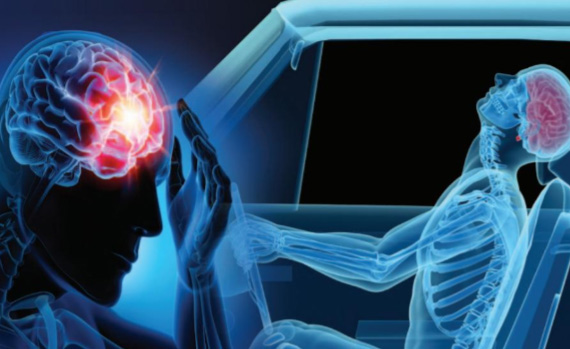
You were stopped at a red light on Flatbush Avenue when the car behind you slammed into you. Your head snapped forward and back. At the ER, the CT scan came back "normal," and they sent you home.
Two weeks later, the headaches won't stop. Bright lights hurt. You walk into a room and forget why. You're wondering if you can do anything about it. In New York, you often can. Here's how it works, in plain English.

Published October 10, 2026. Reviewed for accuracy October 10, 2026.

Quick facts
- Can I sue?
- Often, yes. You need to show the other driver was at fault and that your concussion is a "serious injury" under New York law.
- Fault
- In a rear-end crash, the driver who hit you is presumed to be at fault.
- The hard part
- Proving the concussion is serious. Testing by a neurologist or neuropsychologist is often the key.
- Normal CT or MRI?
- That doesn't end your case. Concussions often don't show up on scans.
- What's it worth?
- It depends mostly on how long your symptoms last and how well they're proven. New York verdicts range from $0 to millions.
- Medical bills
- No-fault insurance pays, no matter who caused the crash. Apply within 30 days.
- Cost
- Free consultation. No legal fee unless we recover money for you.
Can you sue for a concussion after a rear-end collision in New York?
Yes, in many cases. A concussion is a traumatic brain injury. It happens when a hit to the head or body makes your brain move rapidly back and forth, which is exactly what a rear-end crash does. To sue the driver who hit you for pain and suffering, you need two things:
- The other driver was at fault. In a rear-end crash, this is usually the easy part.
- Your concussion is a "serious injury." New York's no-fault system only lets you sue for pain and suffering if your injury meets the definition in Insurance Law § 5102(d). For concussions, this is where most of the fight happens.
Even if you can't sue for pain and suffering, your own no-fault insurance still pays your medical bills and part of your lost wages, up to $50,000.
Who is at fault in a rear-end collision in New York?
Almost always, the driver in the back. New York law requires drivers to keep a safe distance under Vehicle and Traffic Law § 1129. Courts treat a rear-end crash into a stopped or stopping car as proof that the rear driver was negligent, unless that driver can give a good, non-negligent explanation. "The car in front stopped short" often isn't enough.
And you don't have to prove you did nothing wrong to win on fault. New York's highest court made that clear in Rodriguez v. City of New York (2018). That often means a rear-end case can be decided in your favor early, so the case can focus on your injuries.
Is a concussion a "serious injury" in New York?
It can be, with the right medical proof. A concussion doesn't automatically qualify, and brain injury cases are fought hard by insurance companies. These categories in § 5102(d) are the ones that usually fit a concussion:
- Significant limitation of use of a body function or system, like your memory, concentration or balance.
- Permanent consequential limitation, when the problems are expected to last.
- The 90/180 rule: the injury kept you from doing substantially all of your normal activities, like working, for at least 90 of the first 180 days after the crash.
What proof works? In Gogo v. Swiander (2026), a Westchester County case, a high school senior was diagnosed with a concussion after a car crash. A neuropsychologist tested him and found his visual memory in the first percentile, and his neurologist testified the injury was serious and permanent. The jury found a serious injury, and the judge upheld it.
What doesn't work? In Rumford v. Singh (2015), a Queens driver was rear-ended by a taxi. Her expert diagnosed a brain injury from tests and an interview, and tied it to the crash based mainly on her own account. The appeals court found no objective medical evidence and threw out her $450,000 verdict.
Why this matters: insurance companies know concussions are "invisible." If all your records say is "headache," they'll call it minor. Testing that measures your memory, attention and processing speed turns your symptoms into evidence.
What if your CT scan or MRI was normal?
A normal scan does not mean you don't have a concussion. CT scans and standard MRIs look for bleeding and fractures. As the National Library of Medicine explains, a concussion will not show up on imaging tests. Doctors diagnose it through exams and memory and attention tests.
New York courts recognize this. In the Gogo case, the young man's CT scan and MRI were both normal, and the defense doctors said he had no brain injury at all. The jury believed his testing and his doctors instead.
The proof that usually matters most:
- A neurologist's exam and diagnosis, such as post-concussion syndrome
- Neuropsychological testing that measures memory, attention and processing speed
- Medical records that describe your symptoms consistently, from the first visit on
- People who can describe how you've changed, like family, coworkers or a supervisor
Learn how we build these cases on our New York traumatic brain injury lawyer page.
Which concussion symptoms should you watch for after a rear-end crash?
According to the CDC, some concussion symptoms appear right away, and others may not show up for hours or days. Watch for:
- Physical: headaches, dizziness, nausea, blurry vision, sensitivity to light or noise
- Thinking: trouble concentrating, memory problems, feeling foggy or slowed down
- Mood: irritability, anxiety, sadness
- Sleep: sleeping much more or less than usual, trouble falling asleep
Go to the ER or call 911 for a headache that keeps getting worse, repeated vomiting, slurred speech, weakness or numbness, seizures, confusion or trouble waking up. These can be signs of a more serious brain injury.
How much is a concussion case worth in New York?
There's no set amount. Two concussions from the same kind of crash can be worth very different amounts. What matters most:
- How long your symptoms last. A concussion that clears up in a few weeks is worth far less than post-concussion syndrome that lasts years.
- How well it's proven. Testing by a neuropsychologist and a neurologist's diagnosis carry the most weight.
- How it changed your life. Missed work, trouble at school, needing help with daily tasks.
- How much insurance is available. Many New York drivers carry only the $25,000 minimum. Your own SUM coverage can add more, as our uninsured driver guide explains.
Two cases from courts in the Second Department, which also covers Brooklyn and Queens, show the range:
| Case | What happened | Result |
|---|---|---|
| Rumford v. Singh (2d Dept. 2015, Queens) | Rear-ended by a taxi. Brain injury diagnosis without objective medical evidence. | Jury awarded $450,000. The appeals court threw out the verdict. Result: $0. |
| Gogo v. Swiander (Westchester County, 2026) | High school senior. Concussion with normal CT and MRI, but severe memory deficits on testing and lasting problems in college. | Jury awarded $4,000,000 for pain and suffering. The judge ordered a new trial on those damages unless he accepts $2,750,000. |
The difference between those two cases wasn't the crash. It was the medical proof. These are trial results, not typical settlements, and past results don't guarantee yours. For more on how New York values injuries, see our herniated disc settlement guide.
What should you do after a concussion from a rear-end crash?
- See a doctor, and describe every symptom. Not just "headache." Tell them about memory problems, light sensitivity and trouble sleeping, too.
- Ask about a neurologist. If symptoms last more than a couple of weeks, a specialist's evaluation and testing can be the key to your case.
- Keep a simple symptom diary. Write down headaches, missed work and things you couldn't do. It helps your doctors and your case.
- Don't skip appointments. Gaps in treatment are what insurance companies use to say you got better.
- Apply for no-fault within 30 days so your medical bills and lost wages get paid.
- Don't give the other driver's insurer a recorded statement. "I'm fine" on day two can be used against you on day 60.
- Save photos of both cars. But know this: a small dent doesn't mean a small injury. Your brain can be hurt in a crash that barely marks the bumper.
If the driver who hit you had no insurance, read what to do if you're hit by an uninsured driver.
What are the deadlines for a concussion claim in New York?
| Deadline | What it's for |
|---|---|
| 30 days | Apply for no-fault insurance so your medical bills and lost wages get paid. |
| 90 days | File a notice of claim if a City vehicle, such as a police car, or an MTA bus hit you. |
| 3 years | File a lawsuit against the at-fault driver in most car accident cases. |
An Kreyòl: Konmosyon apre yon machin frape ou dèyè
- Nan New York, ou ka souvan fè pwosè si yon machin frape ou dèyè epi ou gen yon konmosyon (concussion).
- Chofè ki frape ou dèyè a anjeneral responsab.
- Yon CT scan oswa MRI ki "nòmal" pa vle di ou pa gen konmosyon.
- Di doktè a tout sentòm ou: tèt fè mal, ou bliye bagay, limyè fè ou mal, ou pa ka dòmi.
- Ou gen 30 jou pou mande asirans no-fault pou bòdwo medikal ou.
Konsiltasyon an gratis. Ou pa peye frè avoka si nou pa jwenn lajan pou ou. Rele nou: 1-800-946-4616. Li plis sou avoka nan Brooklyn ki pale Kreyòl.
Concussion after a rear-end crash? Let's talk about your case.
All you need is wise counsel.
I'll review your medical records, make sure your brain injury is properly documented and handle the insurance companies for you. The consultation is free, and you pay no legal fee unless we recover money for you.
Nou pale Kreyòl. Se habla español.
Common questions
Can I sue for a concussion after a rear-end collision in NY?
Often, yes. The driver who rear-ended you is usually presumed at fault. To sue for pain and suffering, you also need to show your concussion is a "serious injury" under New York law, usually through a neurologist's diagnosis and neuropsychological testing.
Can I get a concussion without hitting my head?
Yes. According to MedlinePlus, a concussion can happen when a hit to the head or body makes the brain move rapidly back and forth. The jolt of a rear-end crash can do that even if your head never hits anything.
My CT scan was normal. Do I still have a case?
Possibly. CT scans and standard MRIs often don't show concussions. New York courts have accepted brain injury claims with negative MRIs when doctors diagnosed the injury through exams, history and testing.
How long after a rear-end crash can concussion symptoms start?
According to the CDC, some symptoms appear right away, and others may not show up for hours or days. See a doctor if new symptoms appear after a crash.
How much is a concussion case worth in New York?
There's no set amount. Value depends on how long your symptoms last, how well they're proven with neurological and neuropsychological testing, how the injury affects your work or school, and how much insurance is available. New York verdicts have ranged from $0, when the proof was too thin, to millions for lasting brain injuries.
How long do I have to sue for a concussion in New York?
Generally three years from the crash. But you must apply for no-fault benefits within 30 days, and claims involving a City vehicle or an MTA bus require a notice of claim within 90 days.
Tell me what happened
Get a free case review. I'll personally read your message and get back to you, usually within 24 hours. Nou pale Kreyòl. Se habla español.
Thank you. Koenig received your message.
I'll personally review it and contact you, usually within 24 hours. If it's urgent, call 1-800-946-4616.
Related guides
Attorney Advertising. This article is general information, not legal or medical advice, and reading it or sending the form does not create an attorney-client relationship. Deadlines and rules can change and depend on your facts. Contact a lawyer about your specific case, and a doctor about your symptoms.
The court decisions described above are public records of other cases and are not results obtained by this office. Prior results do not guarantee a similar outcome. "No fee unless we recover" refers to legal fees. Clients may be responsible for court costs and case expenses; ask about this during your consultation.
Koenig Pierre, Esq., 2653 Coney Island Avenue, Brooklyn, NY 11223. 1-800-946-4616.